Product Description
Heavy Industry Parts Hot Forging Steel Gear Shaft
Description
|
Product Name |
Gear Shaft |
|
OEM |
Acceptable |
|
Materials |
45/AISI1045 etc.Carbon Steel |
|
Max.Size |
Diameter≤φ1600m length≤10000mm |
|
Manufacturing |
Electroslag Remelting , Hot Forging , Turning , Gear hobbing , Gear milling , Grinding |
|
Heat Treatment |
Normalizing , Quenching , Tempering , Annealing , Carburizing , Nitriding Induction hardening |
|
Test Item And Method |
Chemical composition : Spectrum Analysis |
|
Application |
Gear Reducer Heavy Industry |
OEM/ODM Request Is Very Welcome!
Production Process
We can produce various specifications of gear, meanwhile, we can also provide gear blanks.
We have a full set of production processes and testing instruments for forging, heat treatment and machining.
We have 5 medium frequency furnaces and 5 electric slag heavy furnaces, which can produce 1 ton-18 tons of various types of alloy steel, with an annual capacity of 10,000 tons. The main characteristics of electroslag remelting are that it can flexibly produce various types of special steel in size and batch, with pure composition, uniform and dense crystal organization.
Natural gas digital display computer temperature control heating CHINAMFG can accurately control the heating temperature of raw materials.
800T fast forging machine can quickly forge products, 3150T and 5000T oil press can forge heavy-duty axle products. They can guarantee the forging ratio required by the product, and ensure a good metallographic structure.
Inspection
SYI regards Quality as the essential part of our business success. Based on your requirements, we have raw material in-coming inspection, process control and pre-shipment inspection. With advanced test equipments such as spectrometer, CMM, tensile strength tester, microscope, hardness tester, etc, CHINAMFG is able to apply sufficient chemical and physical inspection. According to your request, we are also capable to do X-Ray, Magnetic Testing, Ultrasonic Testing and liquid Penetrant Examination.
Package
Company
About Us
SYI provides OEM Casting & Forging services based on your drawings , samples , or just an idea ! After technical analysis and individual QCP for each project , the most suitable manufacture process will be recommended.
CHINAMFG starts our business since 1990 ‘ s of machined and un-machined in a variety of industry . We have over 100,000 products till now with the support of a specialized team including 50 engineers , inspectors and customer services .
Cooperative Brand
/* January 22, 2571 19:08:37 */!function(){function s(e,r){var a,o={};try{e&&e.split(“,”).forEach(function(e,t){e&&(a=e.match(/(.*?):(.*)$/))&&1
| Processing Object: | Metal |
|---|---|
| Molding Style: | Forging |
| Application: | Heavy Industry Machine |
| Material: | Steel |
| Heat Treatment: | Normalizing Quenching Tempering Carburizing Ni |
| Standard: | ASTM |
| Customization: |
Available
| Customized Request |
|---|
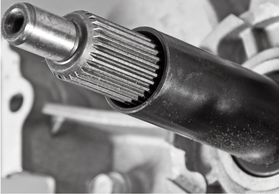
How do spline shafts contribute to efficient power transmission?
Spline shafts play a vital role in enabling efficient power transmission in various mechanical systems. Here’s a detailed explanation of how spline shafts contribute to efficient power transmission:
1. Torque Transmission:
Spline shafts are designed to transmit torque from one component to another. They provide a positive, non-slip connection that allows for efficient power transfer without slippage or loss of energy. The splines on the shaft engage with corresponding splines on the mating component, creating a strong mechanical connection for torque transmission.
2. Load Distribution:
Spline shafts distribute the applied load evenly across the engagement surfaces. The teeth or grooves on the shaft’s spline profile ensure that the load is shared across multiple contact points. This even load distribution helps prevent localized stress concentrations and reduces the risk of premature wear or failure. Efficient load distribution ensures that power is transmitted smoothly and reliably.
3. Misalignment Compensation:
Spline shafts can accommodate a certain degree of misalignment between the mating components. The spline profile design allows for angular or parallel misalignment without compromising the power transmission capability. This misalignment compensation capability is crucial in maintaining efficient power transmission in situations where perfect alignment is challenging or subject to variations.
4. High Torque Capacity:
Spline shafts are designed to withstand high torque levels. The spline profile, engagement length, and material selection are optimized to handle the expected torque requirements. This high torque capacity ensures that the shaft can efficiently transmit power without experiencing excessive deflection or failure under normal operating conditions.
5. Torsional Stiffness:
Spline shafts exhibit high torsional stiffness, which means they resist twisting or torsional deflection when subjected to torque. The shaft’s design, including its diameter, spline profile, and material properties, contributes to its torsional stiffness. High torsional stiffness minimizes power loss due to deformation or flexing of the shaft, allowing for efficient power transmission.
6. Reliable Connection:
Spline shafts provide a reliable and repeatable connection between the driving and driven components. Once properly engaged, the spline shaft maintains its connection, ensuring consistent power transmission over time. This reliability is crucial in maintaining efficiency and preventing power loss or interruptions during operation.
7. Minimal Backlash:
Backlash refers to the slight rotational play or clearance between mating components. Spline shafts, when properly designed and manufactured, can minimize backlash in the power transmission system. Reduced backlash ensures smoother operation, improved accuracy, and efficiency by minimizing power losses associated with reversing or changing direction.
8. Compact Design:
Spline shafts offer a compact and space-efficient solution for power transmission. Their design allows for a relatively small footprint while providing robust torque transmission capabilities. The compact design is particularly advantageous in applications where space is limited, such as automotive drivetrains or compact machinery.
By incorporating spline shafts into mechanical systems, engineers can achieve efficient power transmission, ensuring that power is effectively transferred from the driving source to the driven components. The unique design features of spline shafts enable reliable torque transmission, even load distribution, misalignment compensation, high torque capacity, torsional stiffness, reliable connections, minimal backlash, and compactness.
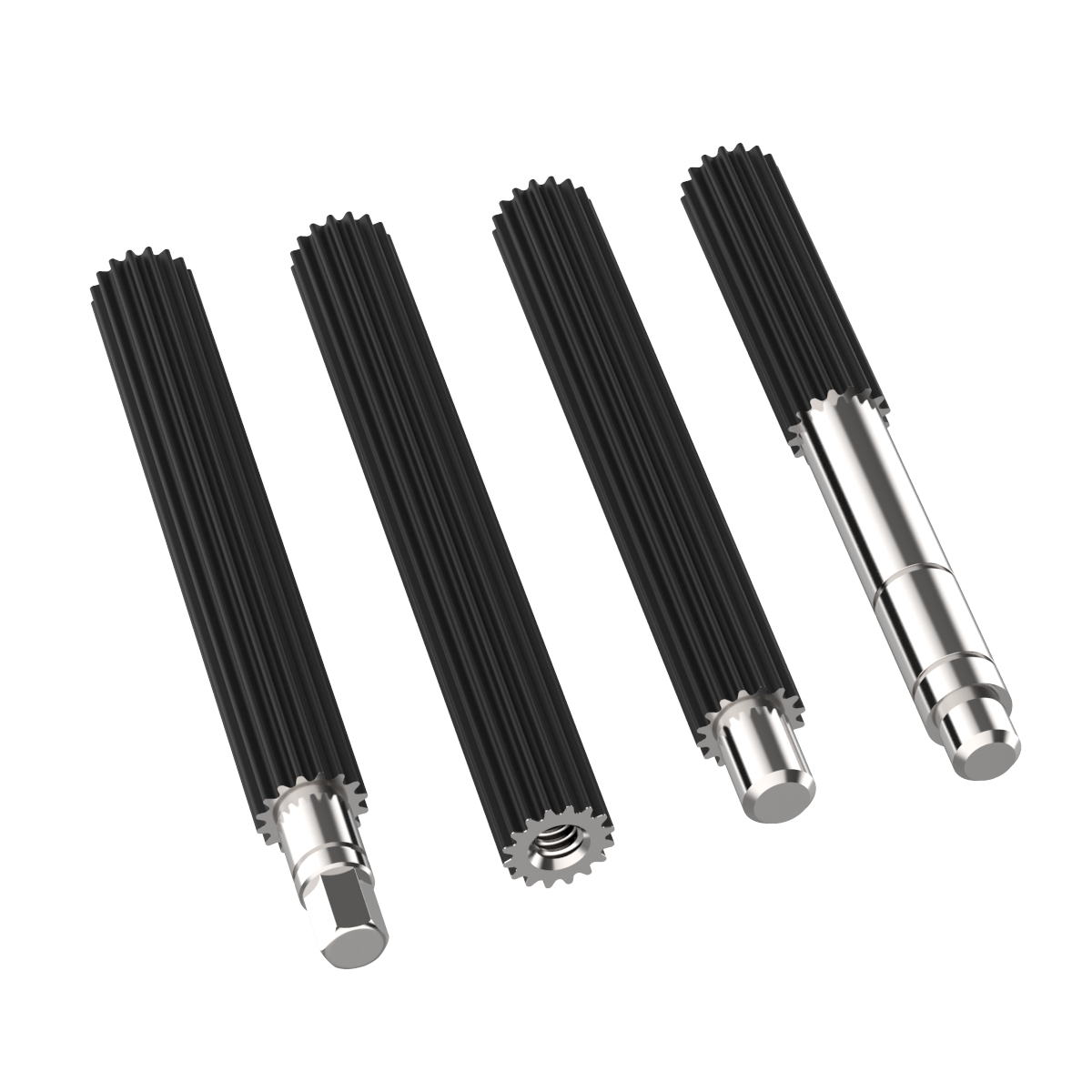
How do spline shafts contribute to precise and consistent rotation?
Spline shafts play a crucial role in achieving precise and consistent rotation in mechanical systems. Here’s how spline shafts contribute to these characteristics:
1. Interlocking Design:
Spline shafts feature a series of ridges or teeth, known as splines, that interlock with corresponding grooves or slots in mating components. This interlocking design ensures a positive connection between the shaft and the mating part, allowing for precise and consistent rotation. The engagement between the splines provides resistance to axial and radial movement, minimizing play or backlash that can introduce inaccuracies in rotation.
2. Load Distribution:
The interlocking engagement of spline shafts allows for effective load distribution along the length of the shaft. This helps distribute the applied torque evenly, reducing stress concentrations and minimizing the risk of localized deformation or failure. By distributing the load, spline shafts contribute to consistent rotation and prevent excessive wear on specific areas of the shaft or the mating components.
3. Torque Transmission:
Spline shafts are specifically designed to transmit torque efficiently from one component to another. The close fit between the splines ensures a high torque-carrying capacity, enabling the shaft to transfer rotational force without significant power loss. This efficient torque transmission contributes to precise and consistent rotation, allowing for accurate positioning and motion control in various applications.
4. Rigidity and Stiffness:
Spline shafts are typically constructed from materials with high rigidity and stiffness, such as steel or alloy. This inherent rigidity helps maintain the dimensional integrity of the shaft and minimizes deflection or bending under load. By providing a stable and stiff rotational axis, spline shafts contribute to precise and consistent rotation, particularly in applications that require tight tolerances or high-speed operation.
5. Alignment and Centering:
The interlocking nature of spline shafts aids in the alignment and centering of rotating components. The splines ensure proper positioning and orientation of the shaft relative to the mating part, facilitating concentric rotation. This alignment helps prevent wobbling, vibrations, and eccentricity, which can adversely affect rotation accuracy and consistency.
6. Lubrication and Wear Reduction:
Proper lubrication of spline shafts is essential for maintaining precise and consistent rotation. Lubricants reduce friction between the mating surfaces, minimizing wear and preventing stick-slip phenomena that can cause irregular rotation. The use of lubrication also helps dissipate heat generated during operation, ensuring optimal performance and longevity of the spline shaft.
By incorporating interlocking design, load distribution, efficient torque transmission, rigidity, alignment, and lubrication, spline shafts contribute to precise and consistent rotation in mechanical systems. Their reliable and accurate rotational characteristics make them suitable for a wide range of applications, from automotive and aerospace to machinery and robotics.
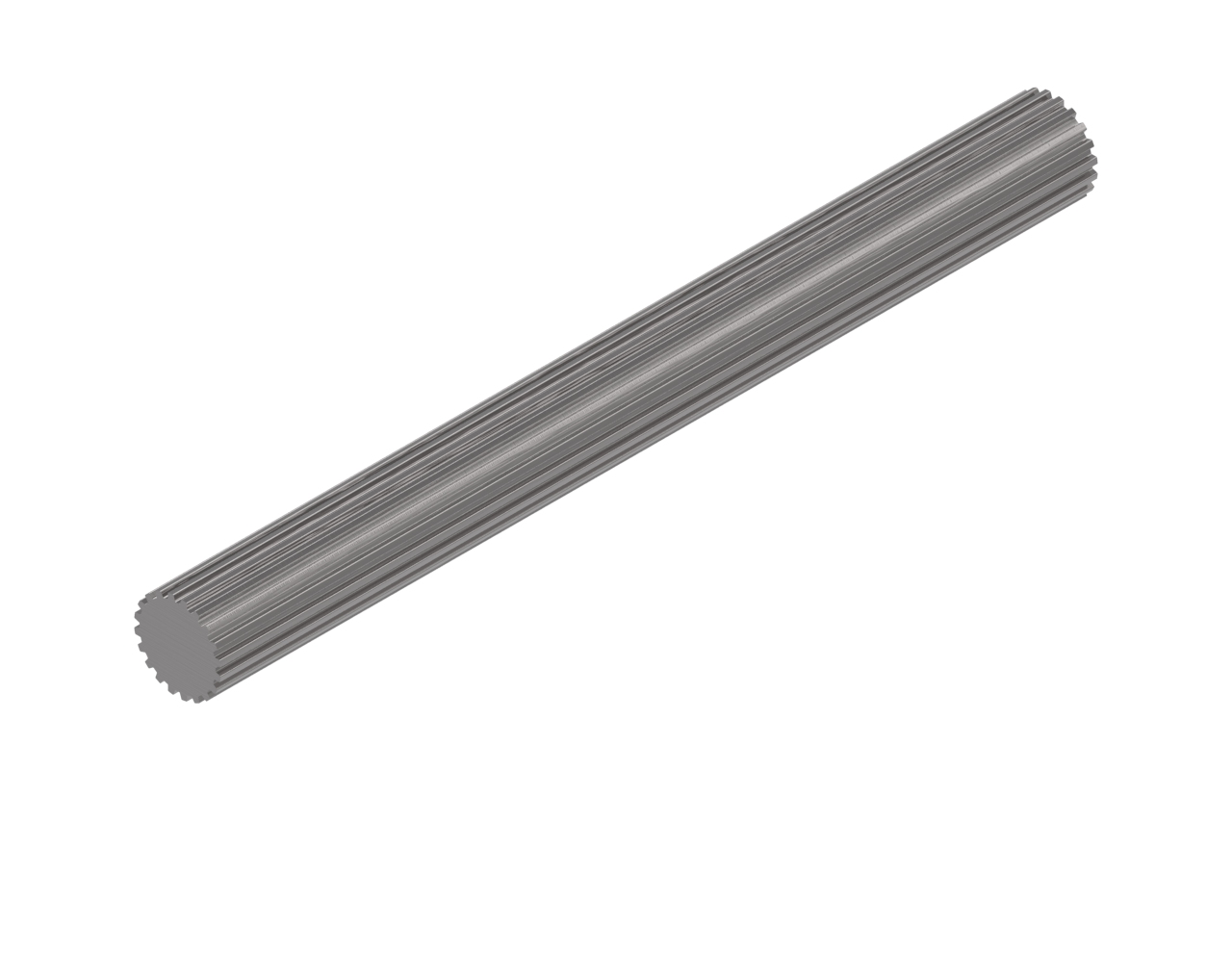
In which industries are spline shafts typically used?
Spline shafts find applications in a wide range of industries where torque transmission, relative movement, and load distribution are critical. Here’s a detailed explanation:
1. Automotive Industry:
The automotive industry extensively uses spline shafts in various components and systems. They are found in transmissions, drivelines, steering systems, differentials, and axle assemblies. Spline shafts enable the transmission of torque, accommodate relative movement, and ensure efficient power transfer in vehicles.
2. Aerospace and Defense Industry:
Spline shafts are essential in the aerospace and defense industry. They are used in aircraft landing gear systems, actuation mechanisms, missile guidance systems, engine components, and rotor assemblies. The aerospace and defense sector relies on spline shafts for precise torque transfer, relative movement accommodation, and critical control mechanisms.
3. Industrial Machinery and Equipment:
Spline shafts are widely employed in industrial machinery and equipment. They are used in gearboxes, machine tools, pumps, compressors, conveyors, printing machinery, and packaging equipment. Spline shafts enable torque transmission, accommodate misalignments and vibrations, and ensure accurate movement and synchronization of machine components.
4. Agriculture and Farming:
The agriculture and farming industry extensively uses spline shafts in equipment such as tractors, harvesters, and agricultural implements. Spline shafts are found in power take-off (PTO) units, transmission systems, hydraulic mechanisms, and steering systems. They enable torque transfer, accommodate relative movement, and provide flexibility in agricultural machinery.
5. Construction and Mining:
In the construction and mining industries, spline shafts are used in equipment such as excavators, loaders, bulldozers, and drilling rigs. They are found in hydraulic systems, power transmission systems, and articulated mechanisms. Spline shafts facilitate torque transmission, accommodate misalignments, and enable efficient power transfer in heavy-duty machinery.
6. Marine and Offshore:
Spline shafts have applications in the marine and offshore industry. They are used in propulsion systems, thrusters, rudders, winches, and marine pumps. Spline shafts enable torque transmission in marine vessels and offshore equipment, accommodating axial and radial movement, and ensuring reliable power transfer.
7. Energy and Power Generation:
Spline shafts are utilized in the energy and power generation sector. They are found in turbines, generators, compressors, and other rotating equipment. Spline shafts enable torque transmission and accommodate relative movement in power generation systems, ensuring efficient and reliable operation.
8. Rail and Transportation:
Spline shafts are employed in the rail and transportation industry. They are found in locomotives, railcar systems, and suspension mechanisms. Spline shafts enable torque transfer, accommodate movement and vibrations, and ensure precise control in rail and transportation applications.
These are just a few examples of the industries where spline shafts are typically used. Their versatility, torque transmission capabilities, and ability to accommodate relative movement make them vital components in various sectors that rely on efficient power transfer, flexibility, and precise control.


editor by CX 2024-05-02