Splined Shafts Engineered for Australian Industry
Custom-machined involute, parallel, helical and ball splined shafts to DIN 5480, ANSI B92.1 and ISO 14 standards. Direct from our in-house CNC and gear-cutting facility, shipped Australia-wide.
What Is a Splined Shaft, and Why It Matters for Your Build
A splined shaft is a cylindrical mechanical component with a series of equally spaced longitudinal ridges, called splines, machined along its outer surface. Those splines mesh with matching grooves cut inside a mating hub, gear, sleeve or coupling, forming a connection that transmits torque while locking rotational alignment between the two parts. Unlike a single-keyed shaft where torque concentrates on one narrow key, a splined connection distributes the load across every meshing tooth simultaneously. The result is dramatically higher torque density, more uniform stress distribution, and a service life that often outlasts the surrounding gearbox housing.
For Australian engineers specifying drivetrains for mining haul trucks, sugar-cane harvesters, offshore mooring winches or heavy industrial gearboxes, the difference between a generic shaft and a properly engineered spline assembly often decides whether the drive survives a full duty cycle or fails on a Pilbara night shift. Beyond raw torque transfer, these components also enable controlled axial sliding, accurate shaft-to-hub centring, and quick tool-free disassembly during scheduled maintenance — capabilities that keyed shafts simply cannot replicate.
At Ever-power Australia Shafts we machine each shaft to the exact tooth profile, fit class, surface hardness and finish your application demands. Need help picking the right profile? Talk to our application engineers and we will review your drawing and return a fully detailed engineering response.
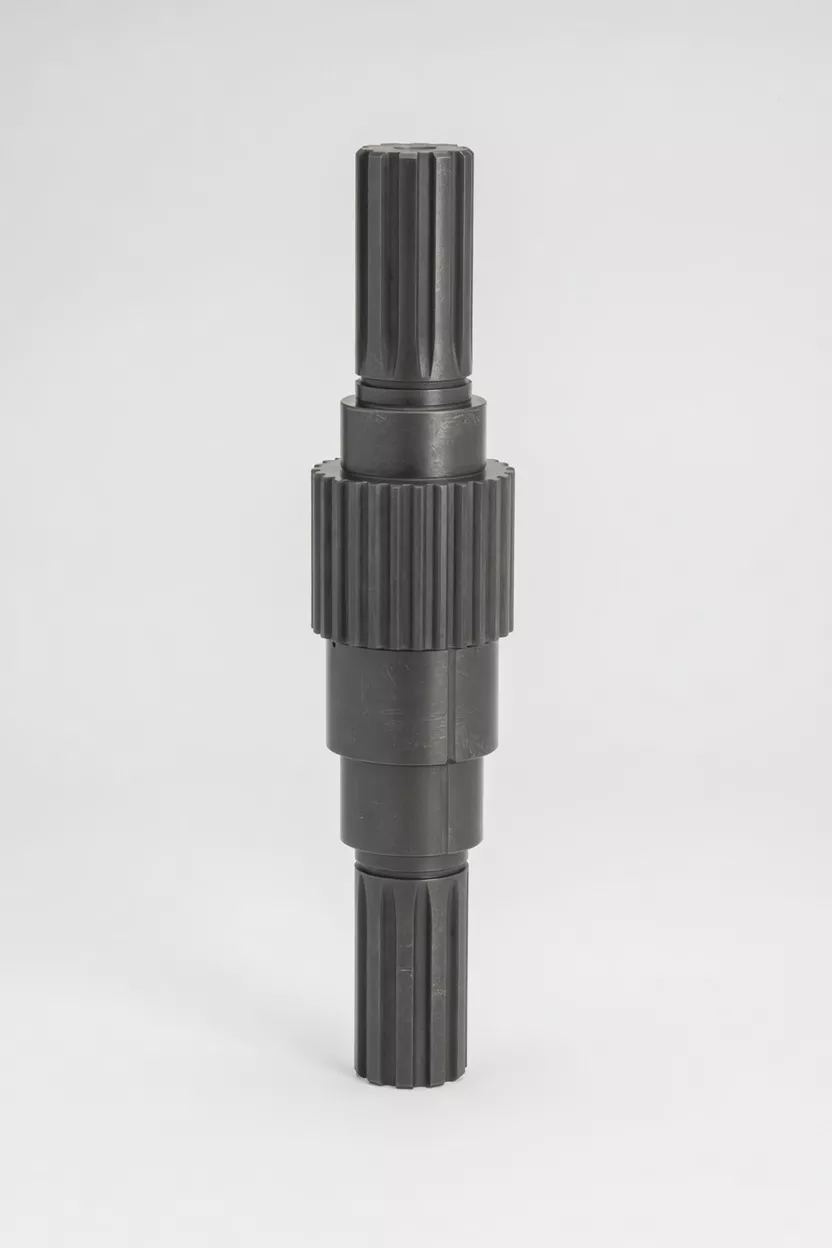
Splined Shaft Families Built to Your Specification
From standard catalogue profiles to fully bespoke geometries supplied against your drawing, every shaft we ship is machined in-house and inspected on calibrated CMM equipment.
 Most Popular
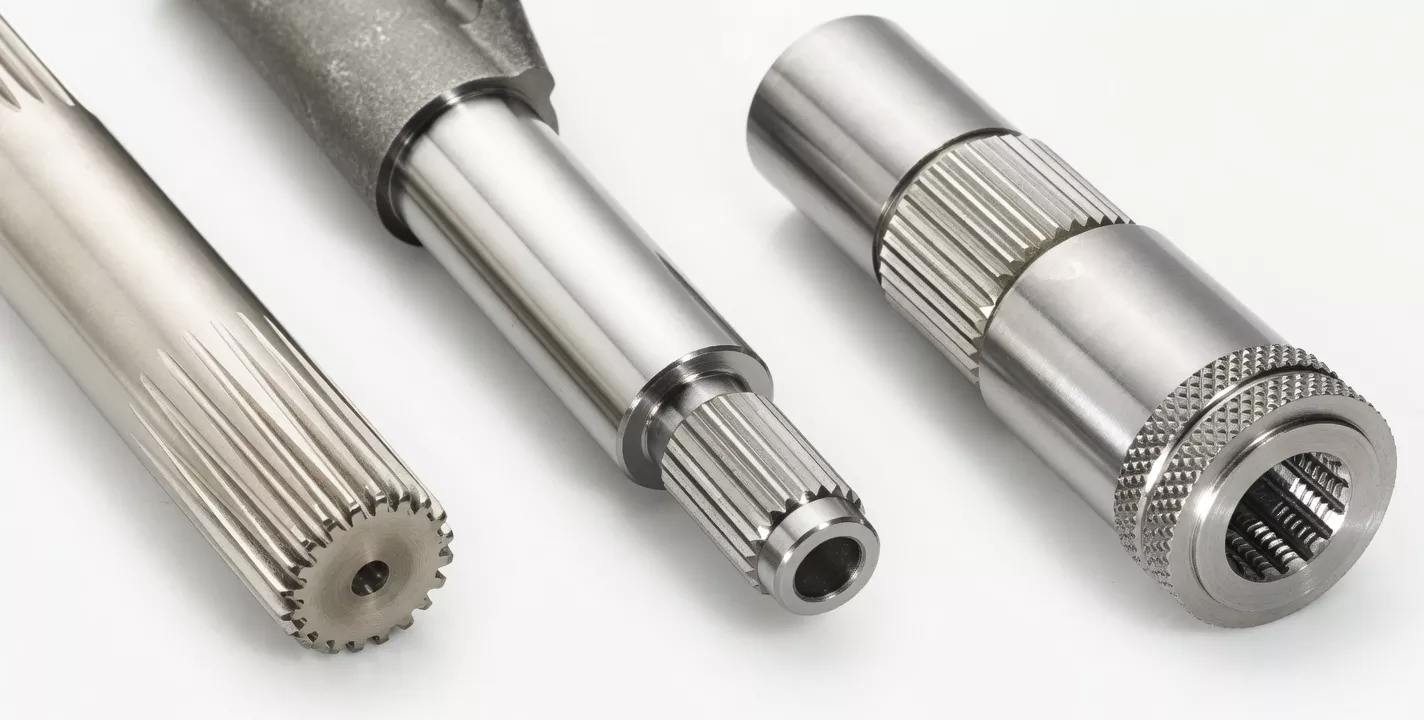
Involute Splined Shafts
Curved involute tooth profile providing superior load distribution, self-centring action and smooth high-torque transmission. Manufactured to DIN 5480 and ANSI B92.1.
View Details →
Parallel / Straight-Sided Splined Shafts
Rectangular tooth profile with parallel flanks. Cost-efficient, high-torque design favoured for machine-tool spindles, agricultural drives and PTO shafts.
View Details →
Serrated Splined Shafts
Triangular 45°, 60° or 90° tooth flanks for self-centring, high-tooth-count connections. Ideal for steering columns, instrument shafts and adjustable assemblies.
View Details →
Helical Splined Shafts
Angled teeth wrap helically around the shaft for progressive engagement, dampened shock loading and quieter running under variable torque cycles.
View Details → Precision
Ball Splined Shafts
Recirculating ball bearings ride in precision raceways, enabling near-frictionless linear travel under full torque. Built for robotics, CNC and pick-and-place systems.
View Details →
Telescopic / Sliding Splined Shafts
Two-piece sliding assembly that compensates for axial movement while maintaining torque transfer. Standard fit for PTO drivelines, conveyors and agricultural rigs.
View Details →Custom Splined Shafts Built to Your Drawings
Send us a 2D drawing, a 3D STEP file, or even a worn sample, and our application team will quote a fully traceable splined shaft solution. Whether you need a one-off replacement for a 1980s European gearbox or a 5,000-piece production run for an OEM build, we treat every project with the same engineering rigour.
- Diameters from 8 mm to 320 mm, lengths up to 4,500 mm
- Hardness up to 62 HRC via induction or case carburising
- Profile inspection on Klingelnberg gear analysers
- Mill certificates, hardness reports and CMM data on request
- NDA on every drawing, before we even quote
Request a Quick Quote
Attach your drawing — our Australian application team will reply with a detailed engineering response.
Industries We Serve Across Australia
From the Bowen Basin coal fields to dairy farms in Gippsland and Adelaide-built defence platforms, our shafts keep critical Australian assets turning.
Automotive
Driveline & transmission
Agricultural
PTO & harvester drives
Construction
Excavator & loader gearboxes
Marine
Propeller & winch shafts
Aerospace
Actuators & rotor shafts
Industrial Machinery
Gearboxes & power units
The Detail That Separates Us from Importers
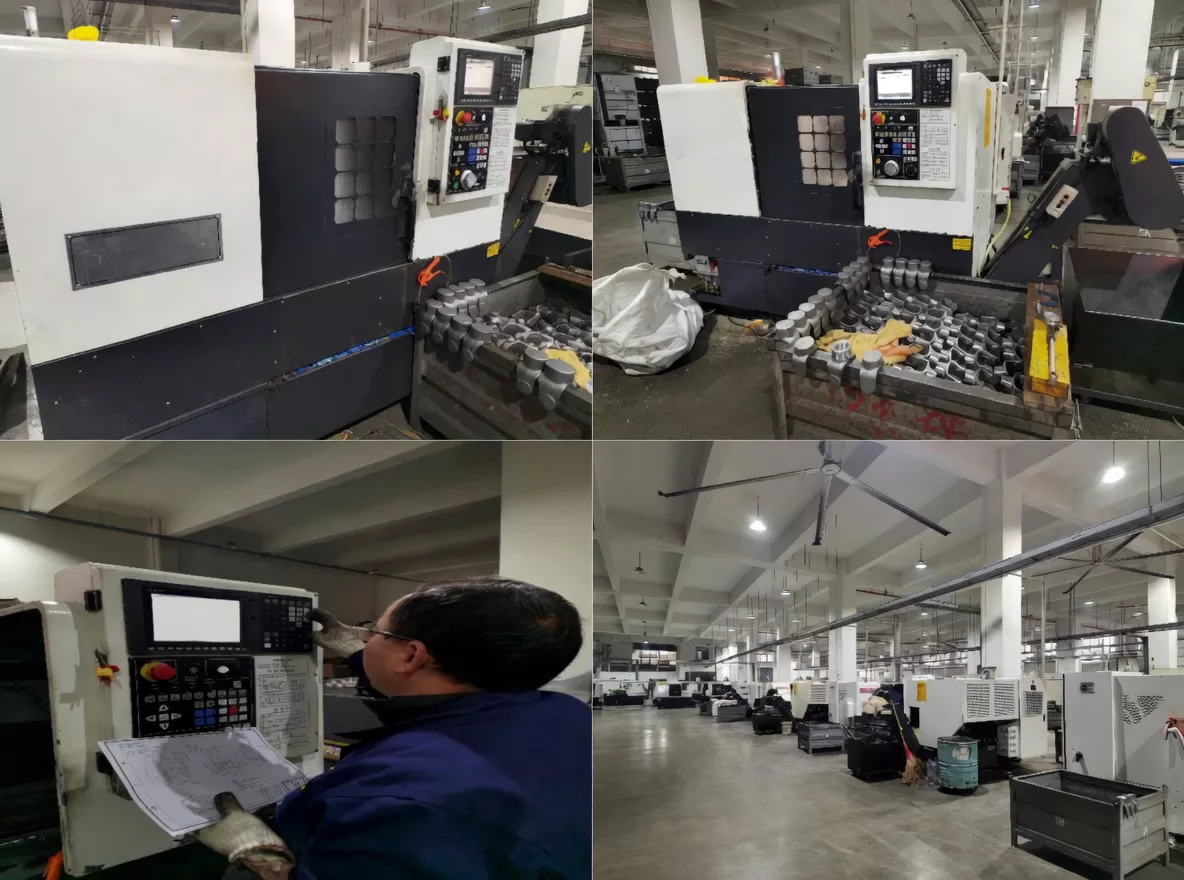
In-House Manufacturing
Forging, turning, gear hobbing, grinding, heat treatment and inspection all under one 12,000 sqm roof — no third-party hand-offs, no surprise sub-contracting, no hidden cost layers.
Material Traceability
Every billet of 1045, 4140, 4340, 20CrMnTi or 17-4 PH stainless arrives with a mill test certificate. Heat numbers stay with the shaft from raw bar through to packing list.
Strict QC Process
Four-stage inspection — IQC, IPQC, FQC and OQC — backed by Zeiss CMM, Klingelnberg P40 gear analyser, surface roughness testers and Rockwell hardness checks on every batch.
OEM / ODM Capability
We have shipped over 180 active OEM programs to mining, agriculture and automotive Tier-1 customers. NDA, PPAP submission and FAI reports are part of the standard workflow.
How the Spline Profiles Compare
Use this matrix as a quick design-stage reference, then send us your loading conditions for a detailed recommendation.
| Profile | Tooth Geometry | Torque Capacity | Self-Centring | Best Suited For |
|---|---|---|---|---|
| Involute | Curved involute flanks, 30°/37.5°/45° | Very High | Yes | Drivetrains, gearboxes, aerospace actuators |
| Parallel / Straight-Sided | Rectangular flanks parallel to axis | High | No (relies on diameter fit) | Machine-tool spindles, PTO shafts, agricultural drives |
| Serrated | Triangular V-teeth, 45° to 90° flanks | Low to Moderate | Yes | Steering columns, instrument shafts, fine adjustment |
| Helical | Angled teeth on a helix path | High (smooth) | Partial | Variable-load drives, low-noise transmission |
| Ball | Linear ball-track grooves | Moderate | Yes | Robotics, CNC, linear-rotary motion |
| Telescopic / Sliding | Mating internal & external splines, axial slip | High | Yes | PTO drivelines, conveyor extensions, articulated rigs |
Manufactured to the Spline Standard You Specify
Our gear-cutting library covers every major splined shaft standard used in Australia and globally. Tooling change-over is built into our process — we do not force the design to suit our shop floor.
German DIN Splined Shafts
The European default for gearbox input/output shafts. Module-based involute geometry, 30° pressure angle. Fully covered for diameters 8 to 320 mm.
American ANSI Splined Shafts
Pitch-based involute splines used heavily in North-American-built mining and agricultural equipment now fielded across Australia.
ISO Splined Shafts
International standard covering both straight-sided and involute profiles. Common for Australian Defence and rail-tier specifications.
SAE Automotive Splines
Side-fit and major-diameter-fit involute splines used widely in commercial vehicle drivelines and PTO interfaces.
JIS Splined Shafts
Japanese specification we machine for fleets of imported industrial equipment from Komatsu, Hitachi and Kubota platforms.
Chinese GB Standard
Reference data for matching legacy plant equipment and asset replacements where original drawings are unavailable.
Our Splined Shaft Manufacturing Workflow
Every splined shaft Ever-power ships to Australia passes through the same disciplined, audit-ready process — designed to remove variability before it reaches your assembly line.
Material Selection
Verified billet from approved Tier-1 mills, with full chemistry and ultrasonic flaw inspection.
Forging & Roughing
Closed-die forging refines grain structure, followed by CNC turning to bring the blank within 0.5 mm of finish.
Spline Cutting
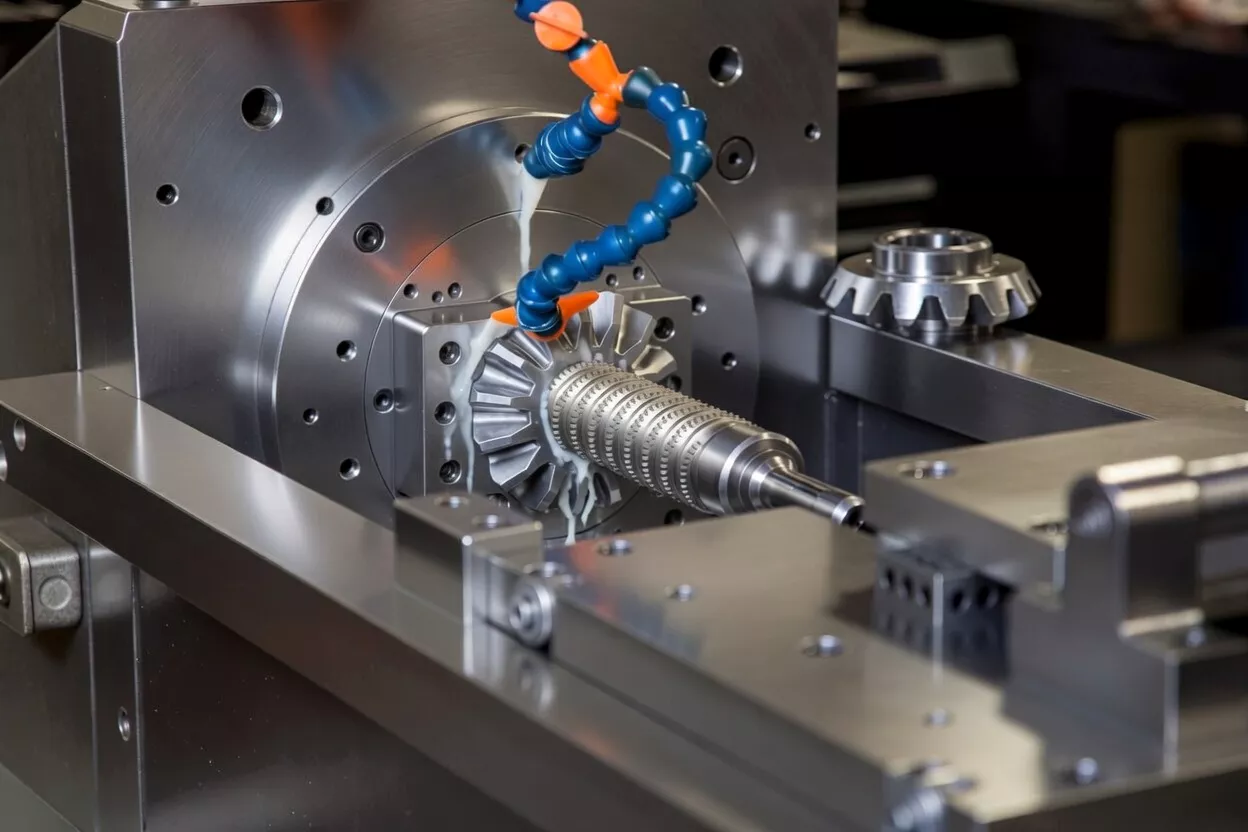
Hobbing, shaping, milling or rolling — selected against profile, batch size and required surface finish.
Heat Treatment
Carburising, induction hardening or nitriding to 58 to 62 HRC, with controlled-cooling cycles to limit distortion.
Finishing & Inspection
Grinding, polishing, deburring, then full CMM and gear-analyser inspection before VCI packing for export.
Engineered Materials for Every Service Condition
Selecting the wrong steel grade is the single most common cause of premature splined shaft failure. Our metallurgists help you match the alloy to the duty cycle.
Medium Carbon Steel
Cost-effective option for general transmission shafts under moderate torque. Induction-hardenable to 55 HRC.
Chrome-Moly Alloy
Workhorse alloy for mining, agricultural and heavy-duty industrial splined shafts. Excellent strength-to-toughness ratio.
High-Strength Alloy
Premium grade for shock-loaded automotive and aerospace shafts where fatigue life is non-negotiable.
Case-Carburising Steel
Standard for gearbox input shafts: hard 60+ HRC tooth surface over a tough core. The default for involute splined shafts.
Stainless Steel
Corrosion-resistant grades for marine, food-processing and chemical-handling applications operating at 180 °C and below.
Nickel Alloy Steel
Tough core, high case hardness — ideal for impact-loaded mining drivelines and crusher gearbox shafts.
Quenched & Tempered
Pre-treated bar stock for splined shafts requiring uniform through-hardness without subsequent heat treatment distortion.
Specified by Drawing
Working with a legacy spec? We will source to your exact AS, BS, EN, ASTM or JIS callout, including dual certification.
Where Our Splined Shafts Are Working Today
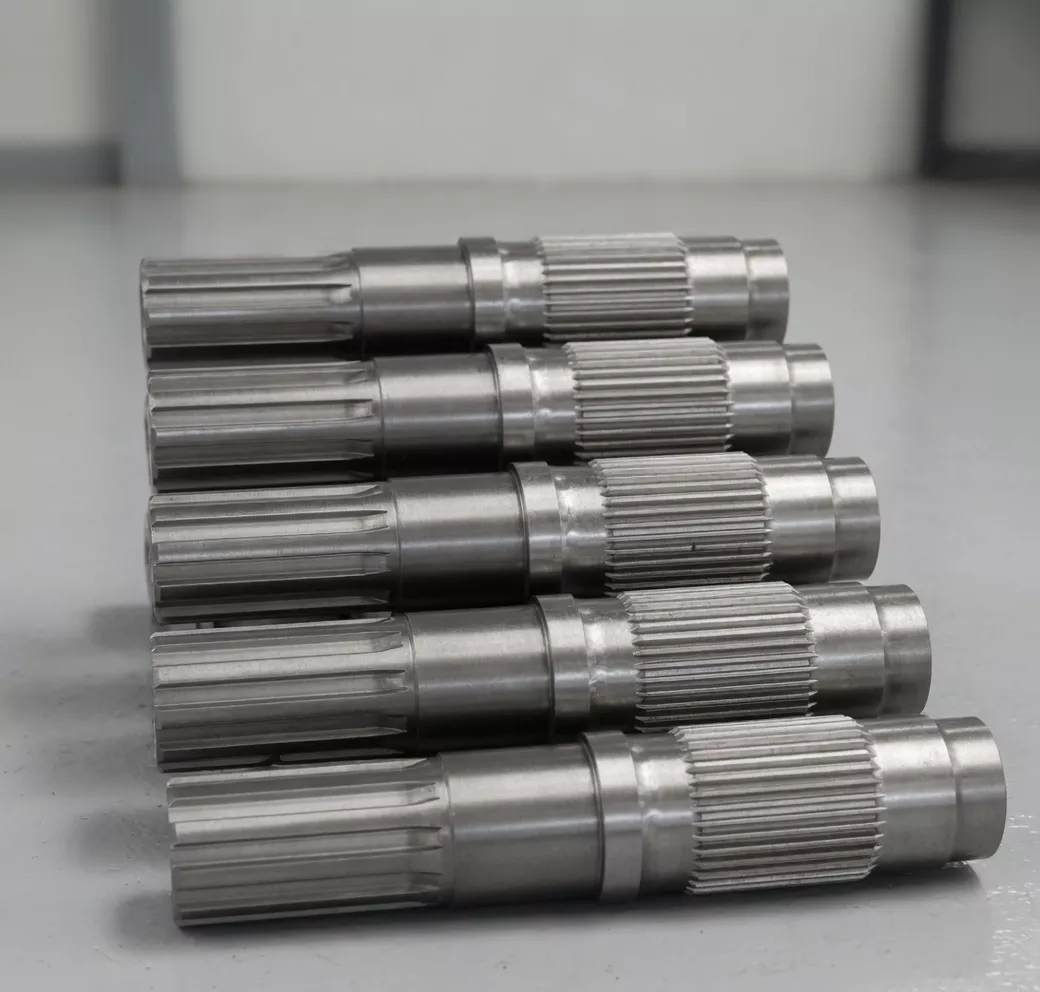
Mining Haul Truck Drivelines, Western Australia
20CrMnTi case-hardened involute splined shafts replacing OEM stock at 30% lower lifetime cost. 24-month duty cycle, no recorded failures across 14 trucks.
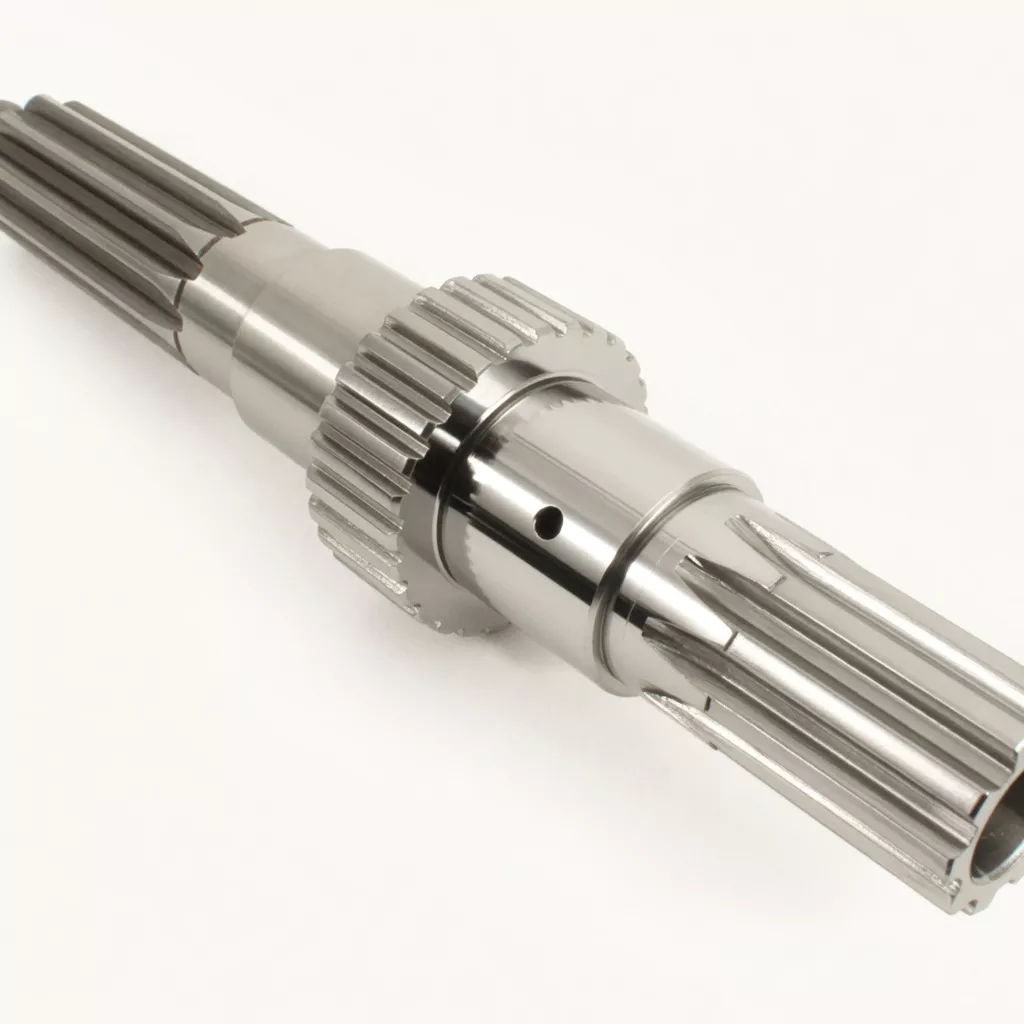
Sugar-Cane Harvester PTO Shafts, Queensland
Telescopic spline assemblies with hardened sliding profiles, replacing imported European units with locally specified geometry. 4140 alloy, induction-hardened to 58 HRC.
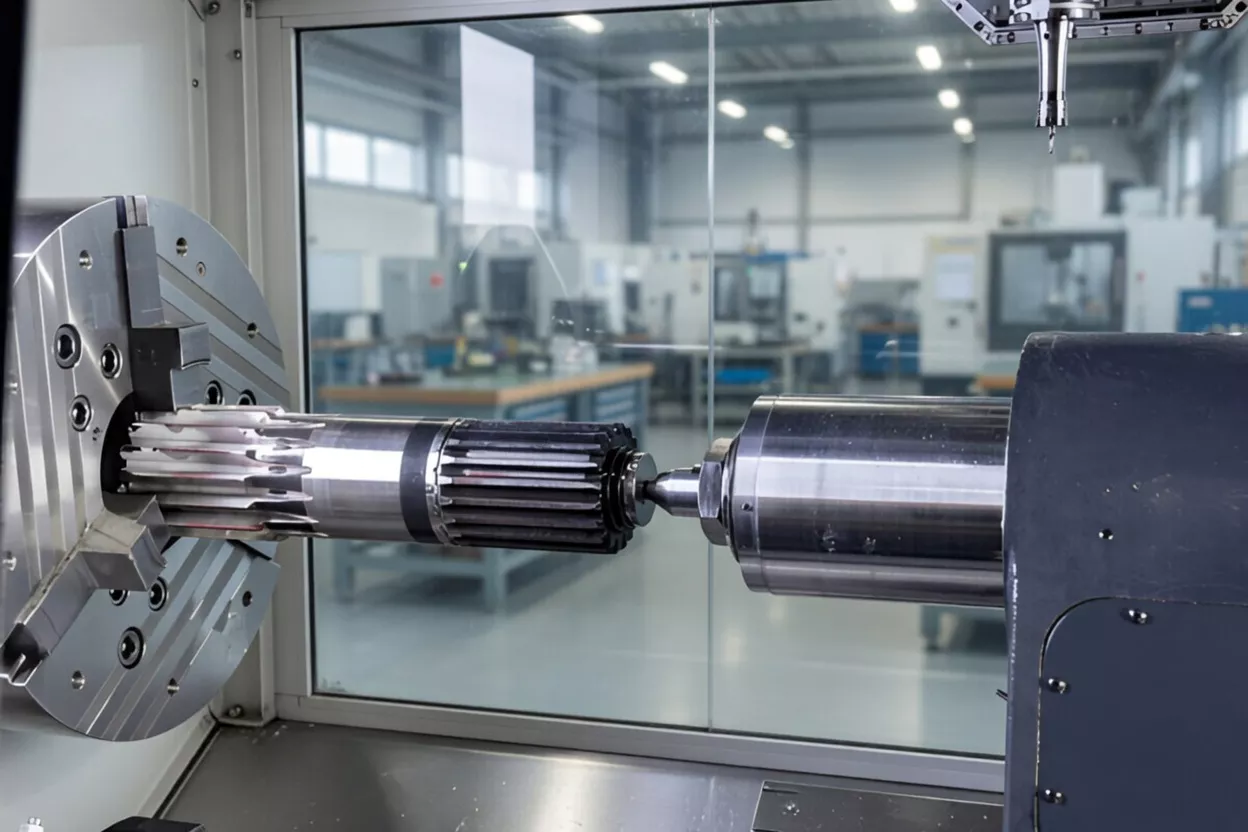
Offshore Mooring Winch Shafts, Bass Strait
17-4 PH stainless involute splined shafts for harsh marine duty, salt-fog tested, supplied with full material traceability and DNV-aligned documentation.
Robotics & CNC Pick-and-Place, Victoria
Precision ball splined shafts running at 10% repeatability tolerances, supplied to two Melbourne automation OEMs across 2024 and 2025 production runs.
Spline vs Key: Why Splines Win in Demanding Drives
Most Australian designers default to a keyed shaft because it is familiar and inexpensive — yet keyways routinely become the weakest link in the drivetrain. Here is how a splined connection compares against a single key on the metrics that actually matter on the shop floor.
| Performance Metric | Single-Keyed Shaft | Splined Shaft | Practical Outcome |
|---|---|---|---|
| Torque Capacity | Concentrated on one key | Shared across 6 to 24 teeth | 2 to 4 times higher rated torque for the same shaft diameter |
| Stress Distribution | Localised at keyway corners | Even around the circumference | Far lower fatigue-crack initiation risk |
| Centring Accuracy | Relies on shaft-bore fit only | Self-centring (involute, serrated, ball) | Smoother running, less vibration, longer bearing life |
| Axial Sliding Under Load | Not possible | Designed in (telescopic, ball) | Absorbs thermal growth and chassis flex |
| Repeated Assembly Cycles | Key shears or burrs after few removals | Hundreds of clean engagements | Faster maintenance turnaround, lower spares cost |
| Failure Mode | Sudden key shear, often catastrophic | Gradual tooth wear, predictable | Condition monitoring becomes useful, not academic |
For drives transmitting more than a few hundred Newton-metres, or operating under reversing or impact loads, switching from a keyed connection to a splined drive is one of the highest-ROI design changes available — and it rarely requires significant rework on the surrounding hub or gear.
Common Failure Modes (and How to Prevent Them)
Understanding why these components fail is the first step to building drives that last. We see the same failure modes recur across mining, agricultural and marine breakdowns — and every one of them is preventable at the design stage.
Tooth Surface Wear
Caused by inadequate lubrication, micro-pitting under high contact stress, or insufficient case hardness. Specify case-carburised 20CrMnTi or 8620, hold a minimum 58 HRC at the tooth flank, and ensure the lubrication regime matches the operating speed.
Fretting Corrosion
Small oscillating motions between mating teeth under load generate red oxide and seize the assembly. Use molybdenum-disulfide grease at assembly, apply phosphate or manganese coatings on the tooth flanks, and consider a tighter side-fit class.
Tooth Root Fatigue Cracking
The classic killer of involute profiles under reversing torque. Always specify a generous root fillet radius, avoid abrupt spline run-outs, and chamfer both ends of the spline length to prevent stress risers from forming.
Plastic Deformation
Occurs when peak loads exceed the yield strength of the tooth core. The fix is rarely "harder steel" — usually it means upsizing the spline pitch diameter, reducing pressure angle, or revisiting the duty cycle assumptions used in selection.
Misalignment Damage
Even small angular misalignment between shaft and hub forces edge-loading on a few teeth and accelerates wear by an order of magnitude. Crowned splines tolerate up to 1° of misalignment; specify them whenever installation alignment cannot be guaranteed.
Corrosion in Service
Particularly an issue in marine, food-processing and sub-sea Australian applications. Stainless 17-4 PH or 304 grades, supplemented by sealed boots on telescopic shafts and re-greaseable end caps, eliminate this entire failure mode.
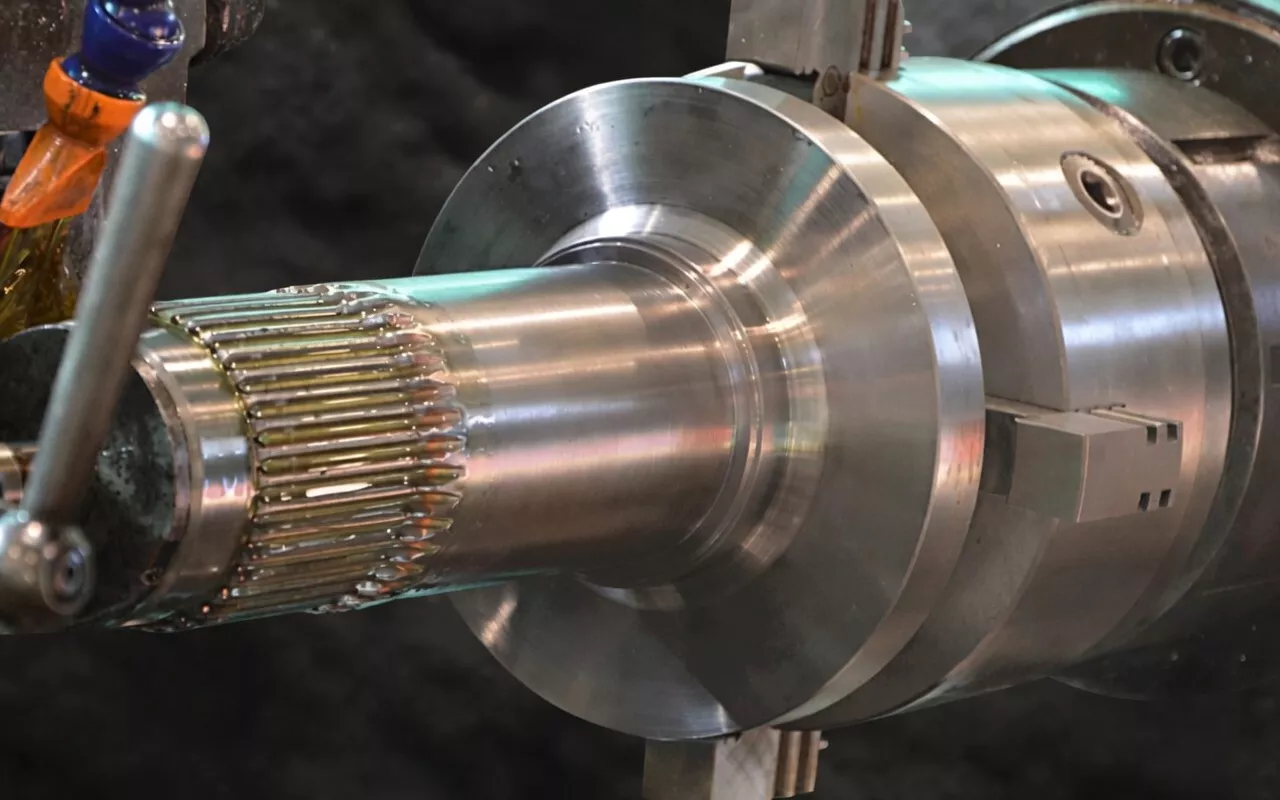
How to Specify a Splined Shaft Without Costly Rework
The single most common cause of costly rework on imported transmission components is an incomplete drawing. Before requesting a quote, walk through the data points below — providing all of them upfront usually eliminates back-and-forth clarification cycles and reduces the risk of dimensional rework on first articles.
- Profile and standard: involute, parallel, serrated, helical, ball or telescopic — and which standard (DIN 5480, ANSI B92.1, ISO 4156, SAE J498).
- Number of teeth, module or pitch, pressure angle: the three numbers that uniquely define an involute spline.
- Major, minor and pitch diameters with tolerances: include the fit class (e.g. side-fit 9H/9e for DIN involute splines).
- Spline length and full shaft length: with location of any retaining grooves, threaded ends or reduced-diameter sections.
- Material grade and heat-treatment state: as-supplied or quenched-and-tempered, with required surface and core hardness.
- Surface finish and coating: Ra value on the tooth flanks, plus any phosphate, black-oxide or zinc plating requirement.
- Inspection and certification: CMM report, gear-analyser printout, hardness traverse, mill cert, FAI or PPAP-level submission.
Trusted by Engineers Who Specify Splined Shafts Every Week
"We sent through a worn DIN 5480 sample with no drawing. Ever-power reverse-engineered the geometry, machined and shipped 60 replacement shafts complete with full inspection records. Tolerances came back tighter than the originals."
"Their engineering team caught a profile error in our drawing before quoting — saved us weeks of rework. CMM reports for every batch, and consistent OEM-grade quality across 18 months of supply."
"Telescopic splined shafts arrived in Brisbane exactly when promised, with full mill certs and a hardness map. Genuinely the most professional shaft supplier we have dealt with from Asia."
Splined Shaft Specification Questions, Answered
The questions our application engineers field every week from Australian buyers and design teams. Don't see yours? Learn more about our team or send a quick enquiry above.
What is the difference between an involute and a parallel splined shaft?
Which splined shaft standard should I specify — DIN, ANSI or ISO?
What surface hardness is typical for a splined shaft?
Can you reverse-engineer a splined shaft from a worn sample?
Can you supply matched internal and external splines together?
What minimum order quantities do you accept?
How do you handle quality assurance for a new Australian customer?
Local Engineering Support, Global Manufacturing Scale
Australian buyers expect more than a freight quote — they expect partners who understand mining duty cycles in the Pilbara, salt-air corrosion in Darwin, and the engineering procurement realities of working across multiple time zones.
East Coast Delivery
Sea freight to Port Botany and Port of Melbourne, with container consolidation for project-volume orders and DDP options on request.
Queensland & Tropical North
Direct shipments for sugar, cane, mining and marine operators, with VCI packaging tuned for high-humidity sea legs.
Western Australia Mining
Direct shipments to Fremantle for Pilbara, Goldfields and Mid West mining operators sourcing transmission and drive components for fleet maintenance.
Defence & Regional
Smaller-volume LCL freight, AS- and ASTM-aligned documentation, and full traceability records suited to defence and rail-tier specifications.
All shipments leave our facility with a packing list, mill certificate, inspection report and a clear container manifest. Customs documentation is prepared in advance to keep your assets moving through Australian Border Force inspection without delay.
Have a Drawing? Send It Through for a Quote.
Upload your drawing or specify your requirements and our Australian application engineers will respond with pricing, material recommendations and a clear inspection plan tailored to your application.
Send Your Inquiry Now →