Description
Helical Splined Shafts
Smooth, Quiet, High-Capacity Power Transmission for Performance-Critical Applications
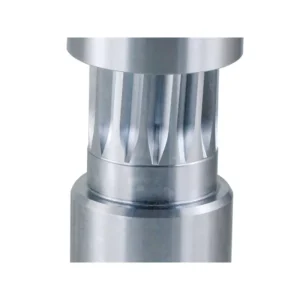
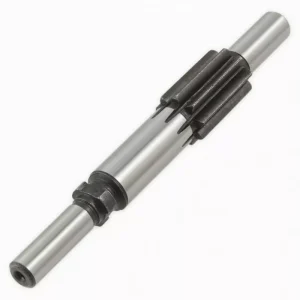
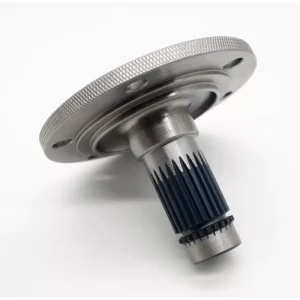
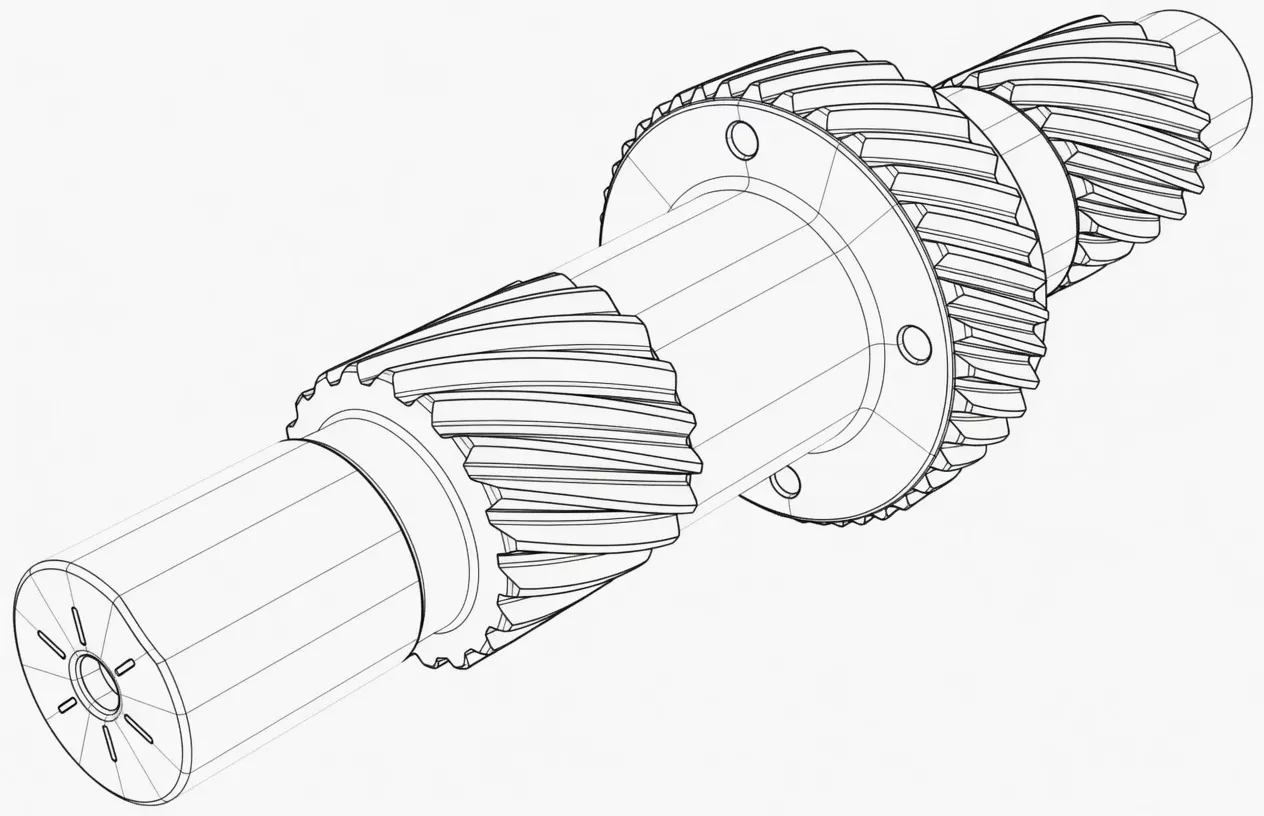
Helical splined shafts are the answer when straight splines run too rough, too noisy or too close to fatigue limits. Their angled tooth geometry produces gradual engagement, distributed contact stress and significantly higher load capacity per unit shaft diameter – the reason they dominate aerospace gearboxes, motorsport drivelines and high-end machine tool spindles worldwide.
Ever-power produces helical splined shafts to custom helix angles ranging from 5° to 30°, in modules from 1 to 8, with grinding-quality tooth profiles for Australian automotive performance shops, defence contractors and precision machinery builders.
 |
 |
The Engineering Case for Helical Splines
|
1
Continuous, Gradual EngagementMultiple teeth share the load at any instant rather than abruptly engaging one at a time. This eliminates the impact noise and shock pulses inherent to straight splines, reducing vibration by typically 40 to 60 percent at the same RPM. |
2
Greater Effective Tooth LengthA 15° helix increases tooth engagement length by approximately 3.5 percent, allowing a smaller shaft diameter to carry the same torque – critical when packaging space inside a transmission case is at a premium. |
|
3
Higher Fatigue EnduranceDistributed contact pressure and reduced peak bending stress on each tooth root extend fatigue life by up to 2.5× over comparable straight-spline shafts under reversing load conditions, validated through bench-test correlation. |
4
Self-Locking CapabilityHelix angles below the friction angle (≤8°) provide self-locking properties useful in clamping mechanisms, while higher helix angles (15°–30°) generate axial force components that can be exploited for automatic preload of bearings. |
Technical Specifications
| Parameter | Range / Capability |
|---|---|
| Helix angle | 5° to 30° (left-hand or right-hand) |
| Module range | Mn 1.0 to Mn 8.0 (normal module) |
| Pressure angle | 20°, 25°, 30° (involute helical) |
| Tooth count | 12 to 80 teeth |
| Outer diameter | Ø20 mm to Ø500 mm |
| Length capacity | Up to 4,000 mm |
| Quality grade | AGMA Q9 to Q14 (DIN 5 to DIN 8) |
| Materials | 17CrNiMo6, 18CrNiMo7-6, 20CrMnTi, 9310, 4340, 300M (aerospace) |
| Hardness | HRC 58–63 case, HRC 30–38 core |
| Surface finish | Ra 0.2 to Ra 0.8 µm (ground tooth flanks) |
| Heat treatment | Carburise + temper, vacuum carburise, gas nitride, induction |
Manufacturing Process for Aerospace-Grade Helical Splines
| 01 |
Forging or Bar Stock PreparationEN-certified or AS9100-traceable raw material with full chemistry, ultrasonic inspection per AMS 2154, and macro-etch verification. |
| 02 |
CNC Turning to Pre-Hob ProfileMulti-axis turning establishes the spline OD, undercut grooves, centre holes and shoulder geometry to within 0.02 mm before tooth cutting. |
| 03 |
CNC Helical Hobbing5-axis CNC hobbing machines synchronise hob spindle rotation with workpiece feed to generate the helix, achieving AGMA Q10 directly off the cutter. |
| 04 |
Heat TreatmentSealed-quench gas carburising or vacuum carburising + double tempering produces controlled case depth (0.6–2.0 mm) and core toughness with minimal distortion. |
| 05 |
CNC Profile GrindingForm-grinding the heat-treated tooth profile lifts quality to AGMA Q12 to Q14, with controlled lead crowning, profile modification and root radius blending. |
| 06 |
Inspection & DocumentationKlingelnberg gear analyser CMM verification, magnetic particle inspection per ASTM E1444, hardness mapping, and surface finish profilometry. |
Industries & Applications
|
✈️
AerospaceEngine accessory drives, flap actuators, helicopter transmissions |
️
MotorsportSequential gearboxes, dog clutches, transfer cases |
️
DefenceArmoured vehicle drivelines, weapon stabilisation drives |
️
Wind EnergyPitch drives, yaw drives, generator coupling shafts |
Machine ToolsHigh-speed spindle drives, indexing tables |
RotorcraftTail rotor drives, intermediate gearbox shafts |
⚡
Industrial RoboticsServo motor pinions, harmonic reducer inputs |
Rail TransportLocomotive traction drives, bogie gearboxes |
Why Australian Engineering Teams Specify Ever-power
Aerospace-Grade Material SourcingDirect supply agreements with EN ISO 9001-certified European steel mills give us reliable access to 17CrNiMo6, 18CrNiMo7-6, 9310 and 300M with full Premelt + VAR certification when required for safety-critical Australian programmes. |
Klingelnberg-Class InspectionTooth profile, lead, pitch, runout and helix accuracy measured on Klingelnberg P40 and Mahr 7000 gear analysers, with reports formatted to AGMA, DIN and ISO conventions on request. |
Vacuum Carburising CapabilityOur low-pressure carburising line eliminates intergranular oxidation, producing the cleaner case microstructure required by AS 9100 and Nadcap-aligned aerospace specifications without expensive overseas heat-treatment outsourcing. |
22-Year Track RecordMore than 1.6 million precision spline shafts shipped since 2003 to 38 countries, with documented defect rate below 250 PPM and complete material traceability for every part number. |
Australian Project Spotlights
|
Project I
Queensland Motorsport Sequential Gearbox BuilderA Brisbane-based aftermarket transmission specialist developing sequential gearboxes for V8 Supercars and rally championships specified Ever-power 18° helical splined shafts in 18CrNiMo7-6 with vacuum carburising. Dyno testing confirmed 22 percent reduction in driveline NVH compared to their previous straight-spline design at 9,500 RPM. Specification: 24-tooth helical, helix angle 18° RH, AGMA Q12, HRC 60 case
|
Project II
Adelaide Defence Vehicle ProgrammeA South Australian defence prime contractor required 12° helical splined shafts in 9310 alloy steel for an armoured vehicle transfer case rebuild programme. Ever-power supplied 380 shafts across 18 months with full chemistry, ultrasonic, MPI and dimensional documentation aligned with AS 9100D requirements. Specification: 18-tooth helical, helix angle 12° LH, vacuum carburised, full FAIR documentation
|
Frequently Asked Questions
When does a helical spline justify the extra cost over a straight spline?Specify a helical spline when noise, vibration or harshness (NVH) is a customer concern, when peak torque exceeds the static rating of a comparable straight spline, or when continuous high-RPM operation generates fatigue concerns. For occasional-use connections at moderate loads, straight splines remain more economical. |
What helix angle should I select?Common ranges are: 8°–12° for general industrial applications, 15°–20° for automotive and motorsport, and 20°–30° where smoothness or self-locking behaviour is critical. Higher helix angles generate larger axial thrust forces that the bearing system must accommodate. |
Can you grind helical splines after heat treatment?Yes. Our profile-grinding cells handle helical spline finishing on shafts up to 4,000 mm long and Ø500 mm OD, achieving AGMA Q12 to Q14 quality with controlled lead and profile modifications including crowning, root relief and tip relief. |
Do you provide AS 9100 or Nadcap-traceable parts?We are ISO 9001 and IATF 16949 certified and operate to AS 9100D-aligned procedures for aerospace orders. We can provide FAIR per AS 9102, Nadcap-aligned heat treatment documentation, and full chemistry and microstructure reports as required by your prime contractor. |
What is the lead time for a helical splined shaft prototype?A 1–10 piece prototype quantity in standard module and helix angle typically ships in 32–40 working days. Complex aerospace specifications with vacuum carburising, profile grinding and full FAIR documentation may extend to 50–60 days. |
Can you reverse-engineer a worn helical spline?Yes. We can scan or measure the unworn portion of an existing shaft to derive helix angle, normal module, pressure angle and addendum modification, then issue a manufacturing drawing for your approval before cutting tooling. |
Ready to Specify Your Helical Splined Shaft?
Send your drawing, gear data sheet or sample. Our gear engineering team will respond within one Australian business day with budgetary pricing, lead time and DFM feedback.
Browse all spline types from the Ever-power homepage.