الوصف
Serrated Splined Shafts – Compact Torque Transfer for Demanding Australian Equipment
Triangular spline profiles deliver the highest tooth count per millimetre of any spline form. Ideal for press-fit shaft connections, instrumentation drives and small-diameter applications where a parallel or involute spline would not fit.
 |
 |
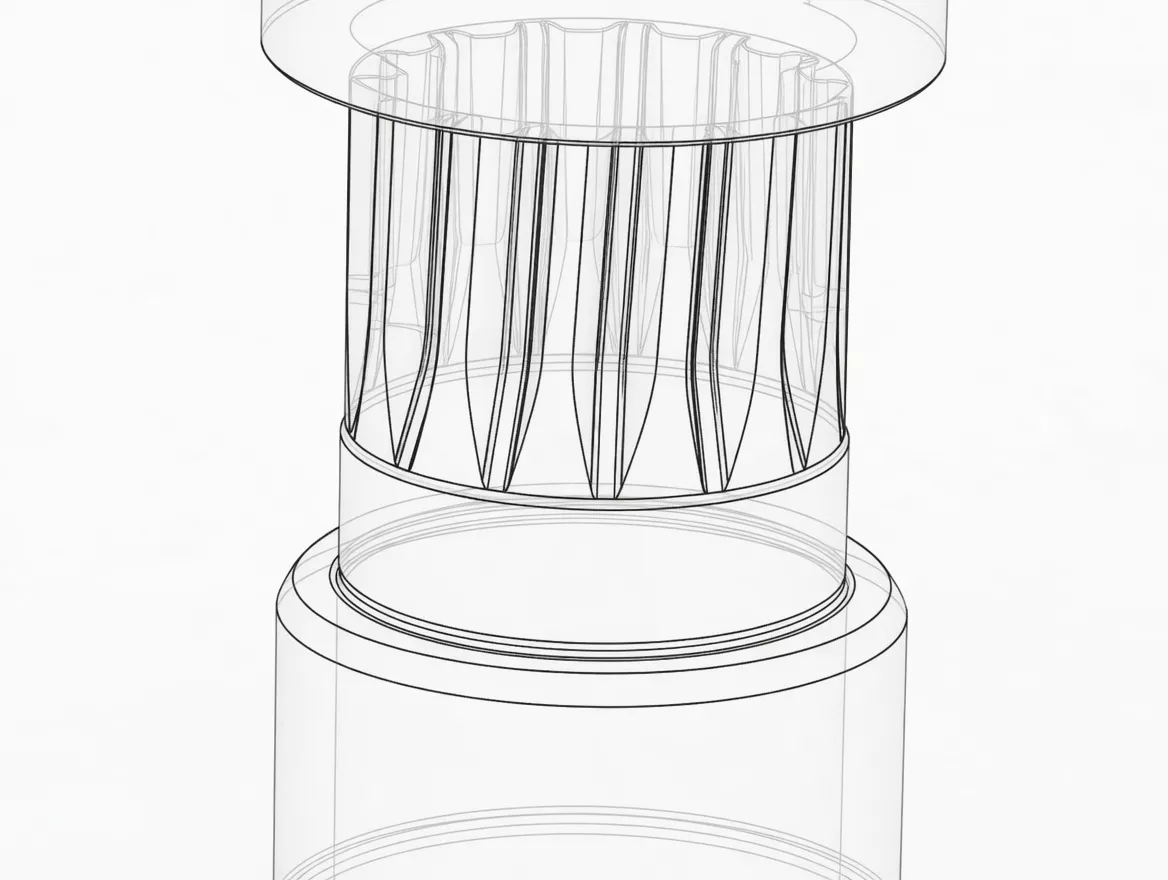
Sometimes called toothed shafts, V-spline shafts or knurled splines, serrated splined shafts use a 60° or 90° tooth flank angle to create a high tooth count on small-diameter shafts. The triangular profile generates a press-fit grip when assembled with the mating hub, eliminating the need for keys, pins or separate locking devices.
Ever-power manufactures serrated splined shafts to DIN 5481 (60°), SAE J499 (45° and 60°), ISO 5480 and customer-supplied profiles for Australian customers across instrumentation, automotive accessory drives, electric motor shaft adaptors and precision tooling assemblies.
Standard Reference Chart
| Standard | Tooth Angle | Diameter Range | Common Use |
|---|---|---|---|
| DIN 5481 | 60° | Ø7 mm – Ø60 mm | Steering columns, levers, knobs, control linkages |
| SAE J499 | 45°, 60° | Ø3 mm – Ø32 mm | Automotive accessories, alternator pulleys |
| ISO 5480 | 60° | Ø6 mm – Ø50 mm | European automotive sub-assemblies |
| ANSI B92.2M | 45° | Ø5 mm – Ø40 mm | North American instrumentation |
| JIS B 1602 | 60°, 90° | Ø6 mm – Ø36 mm | Japanese OEM equipment, motorcycles |
Why Serrated Splines Solve Specific Engineering Problems
Maximum Tooth Count, Minimum DiameterA 12 mm shaft can carry 36 serrations versus only 6 parallel splines, dramatically reducing per-tooth contact stress and enabling reliable torque transfer at small diameters where parallel splines would fail. |
Permanent Press-Fit ConnectionPress-fitting a hardened serrated shaft into a softer hub causes the male teeth to plough into the bore, creating a near-permanent bond rated for full shaft torque without keys or set screws. |
Angular AdjustmentHigh tooth count gives finer angular indexing – a 36-tooth serration allows lever or pointer position adjustment in 10° increments, useful for steering tilt mechanisms and instrument panels. |
Cost-Effective for High VolumesCold-rolling production of serrations is significantly cheaper than hobbing involute splines, making serrated shafts the economical choice for automotive accessory drives produced in millions. |
Manufacturing Specifications
| Parameter | Range / Capability |
|---|---|
| Tooth flank angle | 45°, 60°, 90° (standard); custom on request |
| Production methods | Cold rolling, hobbing, broaching, knurling |
| Tooth count | 12 – 60 teeth |
| Diameter range | Ø3 mm to Ø80 mm |
| Length capacity | Up to 1,500 mm |
| Material grades | 1018, 1045, 4140, 12L14, 304/316 stainless, brass C36000 |
| Tolerance grade | IT7 to IT10 over major diameter |
| Surface finish | Ra 0.8 to Ra 3.2 µm |
| Hardness | HRB 80–95 (soft) / HRC 45–58 (hardened) |
| Surface treatment | Zinc plating, nickel, black oxide, electroless Ni, passivation |
Where Serrated Splined Shafts Earn Their Keep
Steering ColumnsTilt and adjustment mechanisms |
Electric MotorsOutput shaft adaptors, gear motor pinions |
InstrumentationPotentiometers, encoders, gauges |
Wheel HubsPulleys, sprockets, hand wheels |
Hand ToolsRatchet drives, torque tools, sockets |
AppliancesWhitegoods knob shafts, timers, valves |
Medical DevicesSurgical hand pieces, dental instruments |
✈️
Aerospace AuxiliaryCockpit controls, actuator linkages |
Cold-Forming vs Cutting – How We Choose
Cold Rolling (Preferred for High Volume)Cold-rolled serrations work-harden the tooth surface to HRB 95+, eliminate post-machine grinding, and produce zero swarf. Cycle time per shaft: 4–8 seconds. Ideal for runs of 10,000+ pieces. Best for: Automotive accessory drives, motor shafts, fastener stems |
Hobbing or Broaching (Preferred for Low Volume)CNC hobbing or push-broaching cuts serrations to closer tolerance (IT7) and accommodates non-standard angles or stepped diameters. Cycle time: 2–4 minutes per shaft. Best for: Prototypes, replacement service, custom geometries |
Why Australian Engineers Trust Ever-power
22 Years of Spline-Specific ManufacturingEstablished 2003, supplying 38 countries with documented PPM defect rate below 250. Splined shafts are not a sideline – they are our business. |
IATF 16949, ISO 9001, ISO 14001 CertifiedAudit-ready quality system with PPAP submission capability, dedicated quality plans per part number, and full PPF traceability. |
Specialised Cold-Forming CellsSix dedicated cold-rolling machines for serrations alone, capable of producing 24,000 shafts per shift on standard tooling sizes. |
Tooling Library of 2,400+ ProfilesMost DIN 5481, SAE J499 and JIS B 1602 sizes are already tooled, eliminating tooling lead time on common standard parts. |
Australian Project Snapshots
|
Case Study 01
Adelaide Automotive Accessory ManufacturerA South Australian aftermarket alternator pulley assembler converted from imported European serrated shafts to Ever-power 12 mm DIN 5481 shafts in 1045 cold-rolled. Annual cost saving exceeded AUD 168,000 across 95,000 units, with field-failure rate dropping from 0.8 percent to 0.04 percent. Specification: DIN 5481 12×14, 60° flank, zinc plated |
Case Study 02
Melbourne Medical Device OEMA Victorian dental hand-piece manufacturer required 6 mm serrated drive shafts in 316L stainless with passivation, ISO 13485 documentation and lot traceability. Ever-power delivered the first 2,000 piece run in 22 days, including ISO Class 7 cleanroom packaging. Specification: Custom 6×0.4×30, 60° flank, 316L stainless |
Frequently Asked Questions
What is the difference between a serrated spline and a knurled shaft?
A serrated spline is a precision-engineered tooth profile to a recognised standard (DIN 5481, SAE J499) with controlled tooth depth, angle and tolerance. Knurling is a surface-roughening process producing a decorative grip pattern – it does not transmit reliable torque.
When do I use a 60° angle versus a 45° angle?
60° is the European default (DIN 5481) producing a stronger tooth root – preferred for press-fit hub connections. 45° (SAE J499 fine series) gives finer angular indexing and is common in North American automotive electrical accessories.
Can serrated splines be heat treated after rolling?
Yes. We offer induction hardening, carburising and gas nitriding on cold-rolled serrated shafts. For precision applications, we recommend post-heat-treatment dimensional inspection because tooth profile may shift slightly during quenching.
What is the minimum order quantity?
For prototypes, MOQ is 1 piece. Production minimum on custom profiles is 100 pieces, or 50 pieces for standard sizes already tooled in our library. Cold-rolled volume orders begin from 1,000 pieces with significantly lower unit pricing.
Can you produce stainless serrated shafts for medical or food applications?
Yes. We routinely produce 304, 316 and 316L serrated shafts with passivation per ASTM A967, and 17-4PH for higher strength. Material certificates and biocompatibility documentation provided where required.
How do you specify the press-fit interference?
Standard interference is 0.05–0.15 mm on the major diameter for a press-fit assembly into a softer hub. We can custom-grind to your specified press-fit tolerance based on your hub material and assembly equipment.
Do your serrated shafts comply with REACH and RoHS?
Yes. All standard surface treatments (zinc, nickel, black oxide, electroless nickel) are RoHS 3 compliant. REACH SVHC declarations are issued on request for European-bound automotive parts shipped via Australia.
Send Us Your Serrated Spline Drawing
Whether you need 50 prototypes or 50,000 production pieces, we will respond within one Australian business day with pricing, lead time and material recommendations.
Explore other spline types on our main catalogue page.